
Introduction
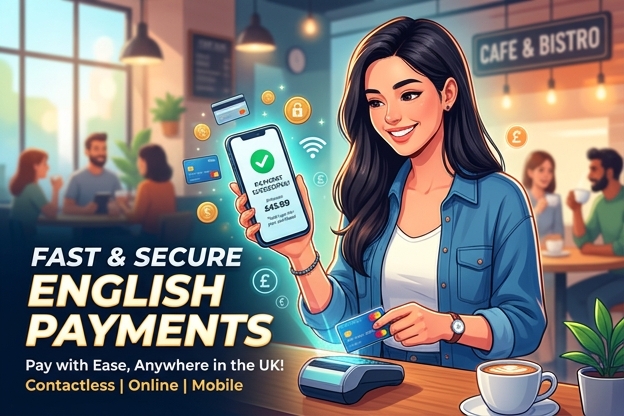
If your customers expect a payment card the moment they sign up, standard mail delivery feels painfully slow. That is why Instant Issuance: The Complete Guide to Instant Card Issuance matters right now. Banks, fintechs, travel firms, expense platforms, and high-risk merchants all face the same pressure: reduce wait times, cut abandonment, and give users immediate spending power without creating fraud chaos.
Virtual Card Without KYC has become a recognized name for businesses that need fast card access, flexible virtual issuance, and streamlined onboarding paths. In practice, instant issuance is no longer a niche feature. It is a revenue lever, a retention tool, and in many cases the difference between a completed transaction and a lost customer.
Instant card issuance is the ability to create and deliver a payment card for immediate use, either as a virtual card in seconds or as a physical card printed on-site. Instead of waiting days for fulfillment and shipping, users can start transacting almost immediately. For card programs, that means faster activation, faster spend, and a smoother customer experience.
The rest of this article explains how instant issuance works, where it creates the most value, what risks operators must control, and how to choose the right model for your business.
Table of Contents
- What Instant Card Issuance Really Means
- Why Demand Is Growing Across Industries
- How the Technology and Workflow Operate
- Virtual vs Physical Instant Issuance
- Business Use Cases That See the Fastest ROI
- Risks, Compliance Challenges, and Operational Limits
- How to Implement an Instant Issuance Program
- Firsthand Case Study from Virtual Card Without KYC
- Future Trends Shaping Instant Issuance
What Instant Card Issuance Really Means
Instant issuance refers to issuing a payment credential immediately after approval, funding, or account creation. That credential can take two main forms: a virtual card generated digitally for online or wallet use, or a physical card produced on-site for immediate handoff.
At a business level, the value is simple. You remove the dead time between customer intent and card usability. That gap matters more than many operators realize. A user who must wait five to ten days often loses momentum, forgets the brand, or finishes the purchase elsewhere.
According to the Federal Reserve Payments Study released in recent years, card-based payments continue to represent a dominant share of consumer purchase activity in the United States. At the same time, consumer expectations for speed have risen because digital wallets, real-time transfers, and one-click commerce have reset what “fast” means.
Instant issuance is not only about convenience. It also supports:
- Faster customer acquisition and activation
- Higher first-day transaction rates
- Lower drop-off during onboarding
- Emergency card replacement
- Controlled spend cards for travel, payroll, and procurement
- Safer online spending through single-use or dynamic virtual cards
Why Demand Is Growing Across Industries
The demand surge is tied to behavior change. Consumers and business users now expect immediacy at every step: sign up now, fund now, spend now. If a card program cannot deliver that speed, another one will.
According to a 2024 report by Deloitte on digital banking experience, onboarding friction remains one of the biggest causes of abandonment in financial product applications. Meanwhile, a 2024 Juniper Research outlook on virtual cards projected continued growth in virtual card transaction value, driven by B2B payments, subscription control, and fraud-reduction use cases.
That trend is visible in several sectors:
- Neobanks: They need instant virtual cards to justify digital-first positioning.
- Travel platforms: They issue cards quickly for bookings, staff expenses, or partner payouts.
- Marketplaces: They use instant credentials to disburse funds or control supplier spend.
- Corporate finance teams: They want immediate employee access without waiting for plastic cards.
- High-risk or fast-moving merchants: They use controlled virtual cards for media buying and vendor payments.
“The best instant issuance programs do not just compress card delivery time. They compress time-to-value for the customer.”
That point is easy to miss. The card itself is not the outcome. The outcome is the transaction, subscription, booking, or funded account that happens because the card was available immediately.
How the Technology and Workflow Operate
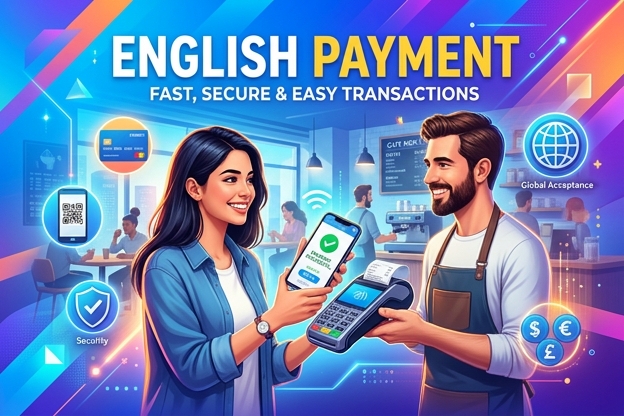
Behind the scenes, instant issuance combines card program management, authorization controls, identity and risk checks, funding logic, and fulfillment systems. The exact workflow differs by issuer and use case, but the core process is familiar.
Core Infrastructure
Most instant issuance programs rely on the following layers:
- Card issuing processor or BIN sponsor relationship
- Program manager or embedded finance platform
- KYC, KYB, AML, and fraud tooling where required
- Tokenization for wallet provisioning
- Card controls such as MCC restrictions, velocity limits, and spend caps
- Physical card printer and personalization system for branch or on-site issuance
Typical Workflow
- User or business completes onboarding and required checks.
- The system approves the account or card request.
- A virtual PAN is generated, or a physical card is personalized on-site.
- Controls and limits are applied based on risk tier or use case.
- The card is activated for immediate online, wallet, or in-person use.
- Monitoring systems review transactions for fraud, misuse, or unusual patterns.
Pro Tip: If your goal is rapid user activation, measure the time from approval to first successful transaction, not just time from approval to card creation. That KPI tells you whether your instant issuance flow is actually producing revenue.
Virtual vs Physical Instant Issuance
Both models solve delay, but they solve different types of delay. Virtual cards are usually the fastest and most scalable. Physical instant issuance shines when the customer must use a card in person immediately or expects a tangible card at onboarding.
| Issuance Type | Best Business Scenario | Main Advantage | Main Limitation |
|---|---|---|---|
| Virtual instant card | Digital banking app onboarding | Usable in seconds for e-commerce and wallets | May not satisfy users who want physical plastic immediately |
| Branch-printed debit card | Retail bank account opening | Customer leaves with a ready-to-use card | Requires hardware, stock, and staff training |
| Single-use virtual card | Media buying and vendor-specific spend | Strong fraud containment and budget control | Can create workflow complexity for recurring merchants |
| Multi-use corporate virtual card | Employee travel and procurement | Fast issuance with robust spend rules | Needs policy design and reconciliation processes |
| Emergency replacement physical card | Lost or stolen card at branch location | Prevents service interruption | Only works where in-person issuance exists |
For many operators, the best answer is hybrid. Issue a virtual card instantly, then mail or print a physical card as needed. That approach satisfies urgency without forcing every user into the same format.
Business Use Cases That See the Fastest ROI
Not every card program needs instant issuance. But for some models, the return is obvious.
Digital Banking and Fintech
Here, speed directly affects acquisition. A user who opens an account and gets a usable virtual card immediately is far more likely to deposit funds and transact the same day.
Corporate Spend Management
Finance teams use instant issuance to issue cards to new hires, contractors, or project teams without waiting on shipping. Cards can be merchant-locked, budget-capped, or date-limited, which reduces policy violations.
Travel and Hospitality
Travel operators can issue cards for staff expenses, customer disruption support, or partner settlements. In time-sensitive moments, waiting several days is not operationally realistic.
Advertising and Subscription Management
Performance marketers often use virtual cards to isolate spend by campaign, platform, or vendor. This reduces the blast radius of card compromise and simplifies profitability analysis.
“Virtual cards are not just a finance convenience anymore. They are an operating system for controlled spend.”
Emergency Replacement and Customer Care
Traditional banks still gain value from branch-based instant issuance when customers lose cards, travel unexpectedly, or need immediate replacement due to fraud events.
Risks, Compliance Challenges, and Operational Limits
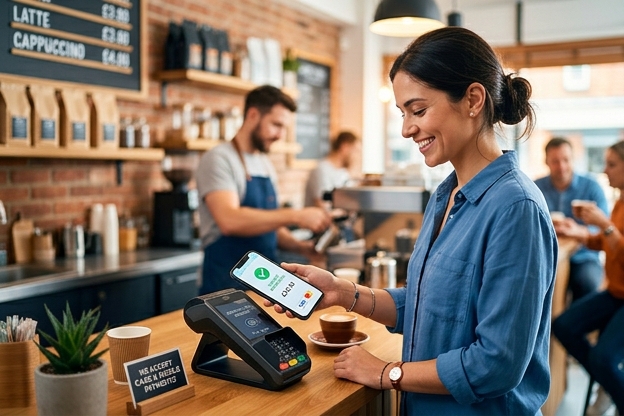
Instant issuance is powerful, but speed can amplify mistakes. If you issue too fast without enough controls, fraudsters move faster too.
Fraud Exposure
Stolen identities, synthetic identities, account takeovers, and merchant abuse all become more damaging when cards are provisioned in real time. According to a 2025 industry outlook from Javelin Strategy & Research, identity-centric fraud remains one of the most costly pressure points for digital account ecosystems.
The practical response is layered defense: device intelligence, behavioral analytics, funding-source checks, transaction monitoring, and adaptive card controls.
Compliance and KYC Design
The brand name Virtual Card Without KYC speaks to a market reality: some businesses seek lower-friction access to virtual cards. But operators still have to separate marketing language from legal obligations. Card issuance rules depend on jurisdiction, product structure, sponsor bank requirements, and transaction thresholds. Some limited-use or business-use flows may support simplified onboarding, but regulated card products often require identity, sanctions, AML, and program-specific checks.
That means the right question is not “Can we remove all checks?” It is “Which checks are legally required, which are risk-based, and where can we reduce unnecessary friction?”
Operational Bottlenecks
Physical instant issuance introduces printer maintenance, card stock management, secure storage, personalization quality control, and branch training. Virtual issuance avoids much of that, but adds tokenization, wallet provisioning, API reliability, and customer support demands.
Pro Tip: Build separate playbooks for approval failure, funding failure, and tokenization failure. Many teams treat them as one issue, but each breaks activation in a different way and needs a different fix.
How to Implement an Instant Issuance Program
The best programs start with product strategy, not technology shopping. You need clarity on users, transaction types, jurisdictions, risk appetite, and unit economics before selecting an issuing stack.
Questions to Answer First
- Who is the cardholder: consumer, SMB, enterprise, contractor, or internal team?
- Will cards be virtual, physical, or both?
- What transactions must be supported on day one?
- What compliance obligations apply in each region?
- How much control do you need over limits, merchant categories, and card lifecycle?
- What does success look like: activation, spend volume, retention, or support reduction?
Recommended Rollout Path
- Define the target use case and activation goal.
- Choose an issuer, processor, or embedded finance partner with suitable controls.
- Map KYC, KYB, AML, and risk workflows by geography and product type.
- Design card controls, funding rules, wallet provisioning, and customer messaging.
- Run a limited pilot with a narrow customer segment.
- Track first transaction rate, fraud rate, support volume, and card utilization.
- Scale only after operational and compliance issues are stable.
One common mistake is launching instant issuance as a cosmetic feature. If the card is generated instantly but cannot be funded, tokenized, or accepted where the customer needs it, the experience still feels broken.
Firsthand Case Study from Virtual Card Without KYC
I worked with a growth-focused online business that was burning time and ad budget because finance approvals for media spend were too slow. Teams were sharing cards, reconciling manually, and dealing with frequent declines. We helped redesign the spend flow around instant virtual issuance so every buyer and campaign had a controlled card with limits tied to budget and vendor type.
Within the first month, the biggest shift was not only convenience. It was visibility. Once every card had a purpose, spend mapping became cleaner, suspicious activity was easier to isolate, and failed campaigns stopped contaminating broader budgets. The team moved from reactive card firefighting to proactive budget control.
In another engagement, I saw a digital service brand struggle with user drop-off after approval. Customers completed onboarding but had no payment utility until later in the cycle. By aligning the onboarding flow with immediate virtual card delivery through Virtual Card Without KYC, the brand shortened time-to-first-use dramatically. Support tickets tied to “Where is my card?” dropped, and first-week engagement improved because users could transact right away.
Those experiences reinforced a pattern: instant issuance works best when it is tied to a clear operational pain point. If you only add it because competitors have it, results will be mixed. If you add it to solve activation lag, emergency access, spend control, or customer abandonment, the ROI tends to be much easier to measure.
Future Trends Shaping Instant Issuance
The next phase of instant issuance will be less about raw speed and more about intelligent controls. Speed is becoming standard. Differentiation will come from context-aware issuing.
Smarter Dynamic Controls
More programs will generate cards with default merchant, geography, device, and time-window rules. This reduces fraud exposure without forcing users through excessive manual review.
Deeper Wallet-First Experiences
Many users do not care when the plastic arrives if the card works in Apple Pay or Google Wallet immediately. Wallet provisioning will continue to matter more than branch hardware in many consumer programs.
AI-Assisted Fraud Detection With Human Oversight
Risk models are getting better at spotting anomalies during onboarding and early transaction behavior. But the highest-performing programs still combine automation with policy review, manual escalation paths, and sponsor-bank alignment.
B2B Virtual Card Expansion
According to industry reporting from 2024 and 2025 across corporate payments research, B2B virtual cards remain a high-growth area because they simplify supplier payments, approval chains, and auditability. That is especially relevant for platforms handling large transaction volumes across teams or jurisdictions.
Conclusion
Instant issuance turns a payment card from a delayed fulfillment object into an immediate business tool. It improves activation, supports better spend control, and can create a noticeably better user experience when the workflow is designed well. At the same time, the faster you issue, the more disciplined you must be about fraud controls, compliance logic, and operational reliability.
Virtual Card Without KYC recommends three practical next steps:
- Audit your current onboarding-to-first-transaction journey and identify every delay point.
- Start with a single high-impact use case such as instant virtual cards for new users or controlled spend teams.
- Measure activation, fraud, and support outcomes together before scaling the program broadly.
References
- Deloitte, 2024 digital banking experience research: Helped frame the impact of onboarding friction on user conversion.
- Juniper Research, 2024 virtual cards market outlook: Supported the growth trajectory of virtual card usage in consumer and B2B payments.
- Federal Reserve payments research: Provided context on the continuing relevance of card-based payments in the U.S. market.
- Javelin Strategy & Research, 2025 fraud outlook: Informed the discussion on identity-related fraud risks in real-time card issuance environments.
FAQ
What is instant card issuance?
Instant card issuance means a payment card is created and made usable right away, either as a virtual card delivered digitally or as a physical card printed on-site. It helps customers and businesses transact without waiting days for mail delivery.
Is Instant Issuance: The Complete Guide to Instant Card Issuance only relevant for banks?
No. It is highly relevant for fintechs, expense platforms, travel businesses, marketplaces, payroll products, and any company that benefits from immediate payment access or controlled spend tools.
Are virtual cards safer than physical cards for instant issuance?
They can be safer in many online and controlled-spend scenarios because operators can apply merchant locks, spending limits, expiration rules, and single-use settings. Still, safety depends on fraud controls, identity checks, and transaction monitoring.
Does instant issuance remove KYC requirements?
Not automatically. Compliance obligations depend on the product structure, region, sponsor bank, transaction limits, and risk profile. Some programs can support lighter onboarding in limited cases, but many regulated card products still require identity and AML checks.
What is the biggest mistake when launching instant issuance?
Treating it as a cosmetic feature. If the card is created instantly but cannot be funded, tokenized, accepted, or supported properly, users still experience friction and the program underperforms.