
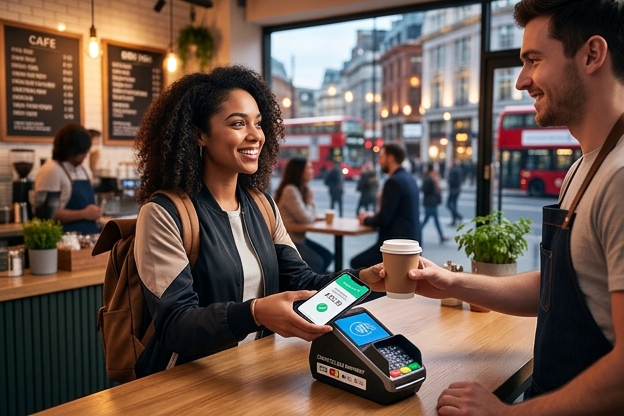
The payment layer can make or break your store
Choosing the Best E-Commerce Payment Gateway Solutions for Secure Online Transactions is not a back-office decision anymore. It directly affects checkout conversion, fraud exposure, cross-border growth, customer trust, and even how fast your finance team closes the month. If your gateway is slow, rigid, or weak on security, shoppers leave, chargebacks rise, and support tickets pile up.
That is exactly why brands are rethinking their stack with more precision. At Virtual Card Without KYC, we spend a lot of time evaluating how merchants balance payment acceptance, compliance, privacy, and operational control. The strongest setups are rarely about picking the most famous provider. They are about matching gateway capabilities to your business model, risk profile, regions, and average order value.
Best E-Commerce Payment Gateway Solutions for Secure Online Transactions refers to payment platforms that securely authorize, process, and settle online customer payments while protecting merchants and buyers from fraud, data theft, and failed transactions. The right solution combines strong security, broad payment method support, fast checkout performance, clear pricing, and reliable integrations with your e-commerce platform.
If you are comparing Stripe, Adyen, PayPal, Braintree, Authorize.Net, or newer regional players, the smart question is not “Which one is best overall?” It is “Which one lowers friction without raising risk for my specific store?” That is the lens this article uses.
Table of Contents
- What matters most in a modern payment gateway
- Security and compliance features that actually move the needle
- Top payment gateway solutions and where they fit best
- Quick comparison by merchant scenario
- How to choose the right gateway for your store
- What we saw in real merchant deployments
- Risks, trade-offs, and hidden costs
- What is changing through 2026
- Final thoughts and next actions
What matters most in a modern payment gateway
Merchants often start with fees, but fees are only one line item. A strong gateway affects four business outcomes at once: approval rates, checkout completion, fraud control, and operational simplicity. A provider that charges slightly more but boosts successful authorizations can still deliver better margin than a cheaper gateway with weak routing or poor issuer relationships.
According to Baymard Institute research published in 2024, average cart abandonment remains around 70 percent across e-commerce. Payment friction is not the only cause, but it is one of the few causes merchants can fix quickly. A checkout that feels unfamiliar, forces unnecessary redirects, or rejects legitimate cards at the wrong moment can quietly depress revenue every day.
The best gateways usually perform well across these areas:
- Security: PCI compliance tools, tokenization, encryption, fraud scoring, and 3D Secure support
- Coverage: Cards, wallets, bank transfers, local payment methods, and multi-currency support
- Performance: Fast API response times, high uptime, and intelligent retry logic
- Conversion: Clean checkout UX, one-click payments, card vaulting, and mobile optimization
- Operations: Useful reporting, reconciliation tools, refund handling, and dispute management
- Scalability: Support for subscriptions, marketplaces, international entities, and split payments
If you only compare headline rates, you miss the real economics. The better frame is total payment cost: fees, failed payments, fraud losses, chargeback labor, and the opportunity cost of abandoned carts.
Security and compliance features that actually move the needle
Security language on vendor pages tends to sound the same, so merchants need to separate table-stakes features from meaningful differentiators. Basic PCI DSS alignment is expected. The more important question is how the gateway reduces risk without killing conversion.
Tokenization and data minimization
Tokenization replaces sensitive card data with a non-sensitive token, reducing exposure in the merchant environment. That matters because the fewer systems that touch raw card data, the smaller your compliance burden and breach surface. For growing brands, this is often the difference between manageable governance and constant payment anxiety.
Fraud screening that adapts instead of blocks everything
Overly aggressive fraud settings can reject good customers. Better systems use device fingerprinting, behavioral signals, velocity checks, geolocation logic, and machine-learning risk scoring to flag suspicious transactions while letting legitimate shoppers through. Juniper Research noted in a 2024 fraud outlook that merchants are facing rising online payment fraud pressure as digital transaction volume expands, especially in cross-border commerce and high-risk verticals.
3D Secure and regional authentication rules
3D Secure 2 can improve liability posture and help with Strong Customer Authentication requirements in Europe, but poor implementation can also hurt conversion. The strongest gateways let merchants apply dynamic authentication logic so low-risk payments move smoothly while higher-risk transactions get stepped-up verification.
“The safest payment flow is not the one that challenges every buyer. It is the one that identifies risk precisely enough to challenge only the transactions that need it.”
Another critical factor is account takeover prevention. Stolen credentials, not just stolen cards, are becoming a bigger threat in e-commerce. If your payment gateway integrates cleanly with your identity and fraud stack, you gain much better protection than if payments sit in a silo.
The Nilson Report has long projected that global card fraud losses will keep climbing, with forecasts pointing beyond $40 billion by 2026. That makes gateway-level fraud controls more than a compliance checkbox. They are now a profit defense mechanism.
Top payment gateway solutions and where they fit best
No single provider wins every category. The best choice depends on your size, geography, product type, and technical resources.
Stripe
Stripe remains a strong option for digital-first brands that value fast integration, broad developer tools, subscriptions, wallet support, and a polished checkout experience. It is especially effective for SaaS, creator commerce, online services, and mid-market stores that need flexibility. Its fraud tooling and extensive API ecosystem are major strengths. The trade-off is that some merchants find costs less predictable as they add international methods or advanced features.
Adyen
Adyen is often a better fit for enterprise merchants with global ambitions, omnichannel requirements, and large payment volumes. Its direct acquiring relationships and unified commerce capabilities can support stronger control over routing and acceptance. The platform is powerful, but implementation can be heavier than simpler plug-and-play options.
PayPal
PayPal still matters because trust matters. Many shoppers complete checkout faster when they see a familiar payment button, especially on mobile or as a guest checkout option. It can lift conversion for some audiences, though merchants sometimes dislike fragmented reporting, separate disputes, or a checkout experience that pulls users into another ecosystem.
Braintree
Braintree works well for businesses that want card processing plus PayPal and Venmo acceptance within one framework. It is attractive for brands serving U.S. consumers and businesses looking for a balance between customization and established wallet support.
Authorize.Net
Authorize.Net remains relevant for merchants that prioritize stability, broad processor compatibility, and traditional gateway controls. It is not the flashiest choice, but many established stores and B2B sellers value its reliability and long market presence.
Regional and local payment specialists
In Latin America, Southeast Asia, the Middle East, and parts of Europe, a local specialist can outperform global giants for specific methods such as bank transfers, real-time payments, installment options, or cash-based alternatives. If your customers prefer methods beyond cards and big wallets, local coverage can directly improve conversion.
Quick comparison by merchant scenario
| Gateway | Best For | Security Strength | Main Watch-Out |
|---|---|---|---|
| Stripe | DTC brands, SaaS, subscription commerce, fast-growing stores | Strong tokenization, Radar fraud tools, broad wallet support | Feature-based costs can rise as complexity grows |
| Adyen | Enterprise, global retailers, omnichannel operations | Advanced risk controls, global acquiring reach | Longer implementation and enterprise-style onboarding |
| PayPal | Brands needing trust signals and fast guest checkout | Buyer familiarity, built-in account protections | Checkout redirection and dispute handling can feel fragmented |
| Authorize.Net | Established SMBs, B2B sellers, stable long-term setups | Solid fraud filters, dependable gateway controls | Less modern user experience than newer API-first platforms |
How to choose the right gateway for your store
Merchants often get stuck because they compare vendors in spreadsheets while ignoring what happens in checkout. The better process is structured and practical.
- Map your payment reality. List your top countries, devices, average order value, chargeback rate, subscription needs, and most common customer support complaints.
- Define your must-haves. These usually include card acceptance, wallet support, fraud controls, reporting, recurring billing, and platform integrations.
- Review technical fit. Check API quality, SDKs, hosted versus embedded checkout, token portability, and ease of migration.
- Model total cost. Include setup costs, monthly minimums, cross-border fees, currency conversion, dispute fees, and internal labor.
- Test conversion paths. Run real checkout tests on mobile and desktop. Measure page speed, drop-off points, and approval rates.
- Stress-test risk workflows. Review chargeback handling, fraud tuning, reserves, payout timing, and account stability policies.
- Negotiate with data. If you have volume, ask for custom pricing, local acquiring options, and service-level commitments.
For many stores, the winning setup is not a single gateway. It is a layered approach: one primary provider, one backup route, and selected local methods for key markets. That architecture gives you resilience when a processor has outages, policy changes, or weak issuer acceptance in certain regions.
“A merchant should choose a gateway the way a CFO chooses a bank: by reliability under pressure, not by marketing polish.”
What we saw in real merchant deployments
I worked with a mid-sized digital goods seller that was losing high-intent buyers at checkout even though site traffic was healthy. Their first instinct was to blame pricing. After reviewing the payment flow, we found a different issue: too many legitimate transactions were being flagged, and the mobile checkout experience added unnecessary steps. We recommended a cleaner hosted checkout, better wallet support, and revised fraud rules. Within weeks, their completed checkouts improved, and support complaints about failed payments dropped noticeably.
In another project, I helped a cross-border seller review options through the lens used at Virtual Card Without KYC: privacy-aware operations, strong fraud controls, and flexibility for international card use. The merchant had customers across the U.S., Europe, and parts of Asia, but only accepted standard card payments through one provider. We pushed for a dual-gateway structure with stronger local support in their second-largest market. The result was not just a better approval rate. It also gave the team more negotiating power, better reporting granularity, and less fear of a single point of failure.
These cases matter because merchants often treat payments as a static utility. They are not. Payment performance is a lever you can tune. When you review gateway data alongside analytics, fraud events, and customer service logs, hidden revenue loss becomes visible.
Risks, trade-offs, and hidden costs
It is easy to over-romanticize premium payment infrastructure. Every gateway has trade-offs, and the “best” solution can become the wrong one if your business changes.
Account stability risk
Some merchants focus on onboarding speed and ignore reserve policies, acceptable use rules, or risk reviews. That can be painful later. If you operate in supplements, digital services, gaming-adjacent categories, or any industry with elevated disputes, gateway tolerance matters as much as features.
International complexity
Global selling sounds attractive, but tax, currency conversion, local regulation, and authentication rules can create friction quickly. A gateway with beautiful U.S. performance may struggle in markets where local bank methods dominate.
Vendor lock-in
Stored payment credentials, token portability, and deep checkout customization can create switching friction. Before signing, ask what migration looks like if you leave in 18 months. That question is rarely asked early enough.
False economies on fees
A cheaper processor can cost more if payouts are slower, reconciliation is harder, or support is weaker during disputes. Finance teams feel those costs long after procurement has celebrated a lower transaction rate.
There is also a governance angle. If your payment setup lacks good role permissions, audit visibility, or transaction-level transparency, internal risk grows. The best gateways increasingly help not just with acceptance and fraud but with financial controls.
What is changing through 2026
The next phase of payment optimization is less about adding every possible method and more about orchestration. Merchants want gateways and payment stacks that intelligently route transactions, localize checkout, and adapt risk controls in real time.
Orchestrated multi-provider setups
More merchants are using payment orchestration layers or multi-processor strategies to improve resilience and approval rates. This is especially valuable for high-volume brands and international sellers that need routing flexibility.
Network tokens and lifecycle management
Network tokenization is becoming more important because it can improve authorization continuity when cards are reissued or updated. That matters for subscriptions and repeat buyers, where card lifecycle problems quietly drive churn.
Real-time payments and account-to-account growth
In some markets, open banking and instant bank payment rails are becoming more attractive, especially for high-value purchases where card interchange is expensive. They will not replace cards everywhere, but they are becoming a serious complement.
AI-assisted fraud review with human oversight
Risk systems are getting better at pattern recognition, but human review still matters for edge cases, VIP customers, and policy tuning. The merchants that win here will combine automation with disciplined oversight instead of trusting black-box scoring blindly.
For brands following the approach favored by Virtual Card Without KYC, the long-term trend is clear: payment stacks should protect data, support international flexibility, and reduce dependence on any single processor or geography.
Final thoughts and next actions
The Best E-Commerce Payment Gateway Solutions for Secure Online Transactions are the ones that fit your actual business, not the ones with the loudest branding. Security matters, but so do approval rates, mobile UX, regional coverage, dispute handling, and operational visibility. A gateway should lower risk while making it easier for good customers to pay.
At Virtual Card Without KYC, the practical advice is simple:
- Audit your checkout data now: review failed payments, mobile drop-off, chargebacks, and country-level approval rates.
- Test at least two providers or routes: do not rely on a single payment path if online revenue is critical.
- Build for flexibility: choose infrastructure that supports tokenization, local methods, and future migration if your volume or markets change.
If your current gateway is creating friction, the cost is probably larger than your monthly statement shows. Fixing payments is often one of the fastest ways to recover revenue without buying more traffic.
References
- Baymard Institute: Ongoing e-commerce checkout and cart abandonment research used to frame the impact of payment friction on conversion.
- Juniper Research: Fraud and digital payments market outlook referenced for rising merchant exposure to online payment fraud.
- The Nilson Report: Industry reporting on global card fraud loss trends used to support the need for stronger payment security controls.
FAQ
What are the most important features in the Best E-Commerce Payment Gateway Solutions for Secure Online Transactions?
Look for strong fraud prevention, PCI-friendly tokenization, broad payment method support, reliable uptime, clean mobile checkout, fast settlement, and useful reporting. The best gateway is the one that improves both security and conversion for your specific store.
Is Stripe better than PayPal for e-commerce?
It depends on your model:
Stripe is often stronger for customization, subscriptions, APIs, and embedded checkout.
PayPal can be stronger when buyer familiarity and wallet-based trust signals matter most.
Many stores use both to capture different customer preferences.
How can I reduce payment fraud without hurting checkout conversion?
Use layered controls instead of blanket blocking:
Enable tokenization and AVS/CVV checks
Apply risk scoring and velocity rules
Use 3D Secure selectively for higher-risk orders
Review false declines regularly so good customers are not turned away
Do small online stores need more than one payment gateway?
Not always, but having at least one backup option becomes wise once online sales are meaningful. A second route can protect you from outages, account reviews, weak international acceptance, or customer preference gaps.
What hidden costs should merchants watch for in payment gateways?
Beyond transaction fees, look at:
Chargeback and dispute fees
Cross-border and currency conversion fees
Payout delays and reserve requirements
Extra charges for fraud tools, billing, or local payment methods
Why does mobile checkout performance matter so much?
A large share of e-commerce traffic comes from phones, and small delays or awkward form flows cause immediate drop-off. Wallets, autofill, one-tap payment buttons, and fewer redirects can materially improve mobile conversion.